The Trinity Debate (2016-2017): A Selected Bibliography

The-Holy-Trinity-in-Stained-GlassThe 2016-2017 Trinity debate over the eternal submission of the Son was covered thoroughly by this blog, other blogs, Christianity Today, podcasts, a panel at ETS, and most certainly in every theological group text in evangelicalism. In an attempt to try and boil the debate down for those who want to read up, reflect, or reference the debate, I created a bibliography on all of the published material I could find based on a list I’ve been accruing since late 2016.

That bibliography was 42 pages. Forty-two. 42.

Frankly, many of those sources were unhelpful, repetitive, and/or broken links. So I decided to whittle it down to the bare essentials — posts that defined the debate or appeared to be shared extensively — and it became an 11-page bibliography. That’ll have to do.

Download the bibliography here.*

*A reader brought to my attention the monster list over at Books at a Glance. This list has been updated with additions from their list and a few others I originally did not include from my own notes.

PlayPlay

The Holy Spirit as Love and Gift

In his fantastic new book, Engaging the Doctrine of the Holy Spirit, Matthew Levering argues that “the Holy Spirit should be praised and contemplated under proper names ‘Love’ and ‘Gift,’ with respect both to his intra-trinitarian identity and to his historical work in Jesus Christ and the church” (2). This idea is nothing new, as Levering reminds us — these names are used by Hilary of Poitiers and Augustine.

While there is much to be said about his argument — and he acknowledges and engages some pushbacks that I would have about the mystery of trinitarian naming and the elevation of certain aspects over others — I found interesting Levering’s assertion that Thomas Aquinas’s definitions and explanations of trinitarian processions and missions help his case:

What Aquinas provides is a unified and profound arrangement of trinitarian processions and missions, the virtues and gifts of the Spirit, habitual grace and the gratuitous graces, and Jesus’s sinless humanity and supreme charity on the cross. In Aquinas, Jesus’s intimate knowledge of the Father, his miracle working, and his prophetic wisdom are bound together with his supreme charity through the invisible mission of the Holy Spirit, who is Love and Gift in person. … To look upon Christ and the Spirit in this way, of course, requires attending to the Spirit’s upbuilding of the “body of Christ” (1 Cor. 12:27), the church, which occurs preeminently in “the higher gifts” and in the “still more excellent way” (1 Cor. 12:31) that is love. (207-08)

Space precludes me from explaining his entire argument (get the book and read it for yourself), but regardless of how one views trinitarian naming, Levering’s assertion that “The Spirit’s mission is always ordered to those whom Jesus came to redeem, and thus to the kingdom of God” (198) pushes us to think about the fittedness for elevating these aspects of the Spirit’s role and mission.

A Primer on Arius and His Heresy

Arius is a major figure in church history, and rightfully so—it was his theology that led to one of the most defining moments in the development of the doctrine of the Trinity. Largely thanks to Arius, the First Council of Nicaea in AD 325 was called to clarify his error about the divinity of the Son of God. This landmark council led to the rejection of Arianism and the first step toward solidifying the Trinitarian doctrine all orthodox Christians now affirm.

In David Wilhite’s new book, The Gospel According to the Heretics, he lays out the major views and situations surrounding the major heretics/heresies of the early church. In regards to Arius, we actually know very little. Most of our information about him and his theology is found in the works of his opponents. Wilhite’s chapter on Arius (pp. 105-128) helpfully distills what we know about him and his teaching:

Biography and Background

  • He was reportedly a tall man.
  • His teachings were often delivered in song, using plain language to convert commoners to his views. This does not mean, however, that his theology was not philosophically rigorous. Indeed, it was.
  • His teachings had spread far and wide, especially in the East.
  • In AD 318, an old man to this point, he heard Alexander describe the Trinity in a sermon, and took exception to both the content of his teachings and the language he deemed as “too philosophical.” This launched his public dispute with the proto-orthodox leaders.
  • Word of his dispute spread to Emperor Constantine, who called together the meeting in Nicaea to hash out the debate and come to a consensus.
  • He was supposedly slapped across the face by Saint Nicholas at the council meeting, but this is largely considered dubious by historians. This should not stop us from sharing this awesome meme.

Theology

Arius’s views were rather straightforward:

  • Jesus preexisted as the Son of God, but was subordinate to the Father, as any son is to his father.
  • The Son must have been created at some point (since he was begotten), and therefore lesser than the uncreated and eternal Father.
  • In trying to hold to monotheism without denying the Son’s divinity, he argued that Jesus is either sort of God or a second God. This led to the Nicaean distinction between homoiousios (the Father and Son share a similar substance—Arius) and homoousios (they share the same substance—orthodox Trinitarians).
  • He argued that the Trinitarians dabbled in modalism, because that was the only logical explanation for their insistence that there is one God, and yet the Son can be equal with him.
  • He also charged Trinitarians with overly allegorizing the Scriptures, instead of taking the “plain meaning” of the texts, which make clear that the Son is subordinate to the Father.

The Trinity is a mystery to us in many ways, but Scripture and tradition give us language and concepts that allow us to affirm the doctrine. Though Arius was (rightly) condemned as a heretic at Nicaea, we should take our cue from him in working diligently to understand and clarify the doctrine of God. If our doctrine of God falters, everything else begins to falter with it. We saw that with Arius, and we see it still today.

When God the Son Became Like Us

Perhaps the most beautiful hymn in Scripture is not found in the Psalms, but in Paul’s letter to the Philippians:

Adopt the same attitude as that of Christ Jesus,

who, existing in the form of God, did not consider equality with God as something to be exploited. Instead he emptied himself by assuming the form of a servant, taking on the likeness of humanity. And when he had come as a man, he humbled himself by becoming obedient to the point of death — even to death on a cross. For this reason God highly exalted him and gave him the name that is above every name, so that at the name of Jesus every knee will bow — in heaven and on earth and under the earth — and every tongue will confess that Jesus Christ is Lord, to the glory of God the Father.
(Phil. 2:5-11, CSB)

This Christmas, we will sing hymns about Immanuel, “God with us.” We will sing of the virgin birth, the nativity scene, and the wise men. We will remember his perfect life and praise him for his sacrificial death. We know that his becoming a man was crucial for our salvation, and we’ll rightly worship him for the incarnation, crucifixion, and resurrection. But the passage above—commonly called the “Christ hymn”—gives us a look at what it really means for God to be with us.

As Christians, we affirm the Trinity, and thus we affirm the divinity of God the Son. Jesus was no mere man, we know that. But Paul explains the depths of this truth to the Philippians. He tells them that Christ existed “in the form of God” and yet “did not consider equality with God as something to be exploited.” Instead, “he emptied himself by assuming the form of a servant, taking on the likeness of humanity.” As the God-man, he didn’t take advantage of his God-ness; rather, “he humbled himself by becoming obedient to the point of death — even to death on a cross.”

In short, God the Son became a Son of Adam. Christ becoming obedient in the incarnation is crucial because God became man, a New Adam, to undo the curse of Adam that we all inherit (Rom. 5:12:-21). Adam’s sin touches every atom of creation and poisons us in a way that would make cyanide blush. We’re not obedient, no matter how hard we try. But the Son of God’s fleshly subjection and obedience to God the Father in the incarnation secures for us the subjection and obedience we reject in our flesh. The Son was not already in subjection to the Father, but rather became a servant in love.

The incarnation itself was a loving sacrifice—not merely because Christ died for us, but because he put himself in the position to die in the first place. As Hebrews 12 tells us, he went to the cross with joy. He could’ve called “twelve legions of angels” to help him escape arrest or to pull him down off the cross (Matt. 26:53), but he didn’t. As God, he has the power to still the waves and cast out demons—no piece of Roman tree could stop him. He doesn’t lay down his life when a Roman executor tells him to—he does so when he wants to (John 10:18). And he did just that, with joy.

God the Son didn’t simply carry eternal obedience with him into the world. He is an eternal Son, but he was not an eternal servant. He holds the same authority and power as the Father, because both are eternally God. He was sent into the world not because he’s been God’s servant for eternity, but because the triune God is not at odds with himself. The Father, Son, and Spirit are always in one accord. And their inseparable will is simple: to make all things new and to unbreak what Adam and Eve broke. So, in love, he became obedient to the Father, doing nothing apart from him (John 5:19-24).

Praise Jesus, Immanuel, for his truly indescribable grace. Lift your eyes to his throne. But remember that Christ left that throne to become something he’d never been, an obedient and perfect flesh-and-blood human being, because you and I are disobedient and imperfect people. God the Son for the first time experienced his own Father’s wrath, felt the excruciating pain of nails driven into his hands and feet, and even spent three days in a grave—not to condemn the world, but to save it (John 3:16-17).

My 5 Favorite Books of 2017​

It’s become a somewhat annual tradition for me and many others to write a post like this. But people love books lists as they consider last-second Christmas gifts or are looking for ways to spend their Amazon gift cards.

There are a few reasons why I’ve compiled this list. First, I love reading and I love to share what I’m reading. Second, I’m also always encouraged by others’ thoughts and their lists often help me pick out a few last books for my Christmas wish list. Third, I get a lot of books from publishers, and while I don’t review or share books I don’t end up liking, I’m always willing to recommend a good book if it is, in fact, good.

In no particular order, here are my five favorite books that I read in 2017. Check out my 2015 list and 2016 list at my old Patheos blog.

Hengel Son of GodThe Son of God by Martin Hengel

Published in 1975, this book was one of many in which Hengel dismantled and reconstructed Christological debates in the mid-20th century, arguing that Christians believed in the divinity of Christ very early on. In this book, Hengel explains the role the title “Son of God” played in that early development of divine Christology. Only coming in at around 100 pages, Hengel still does some significant Christological heavy lifting.

Way of the Dragon StrobelThe Way of the Dragon or the Way of the Lamb by Jamin Goggin and Kyle Strobel

Of all the books I read this year, this one was the most impactful on me personally. It proved to be the final straw that broke my social media camel’s back. I deleted all my social media accounts soon after finishing it.

Through biblical exegesis, personal reflections, and interviews with men like J. I. Packer and Eugene Peterson, Goggin and Strobel lay out the case for a view of ministry and leadership (and indeed, life) that resembles the way of the Lamb—generosity, self-sacrifice, wisdom in speaking truth, love, etc. Too often, we fall into the way of the dragon (Satan himself)—selfishness, pride, vitriol, hate, etc. And where I saw myself falling into the way of the dragon the most was on social media and the struggle of “platform.”

On God and Christ NazianzusOn God and Christ by St. Gregory of Nazianzus

I’ve read this book several times, and reading it again in 2017 reminded me of its beauty. Simply put, it is one of the most important books (originally a set of sermons) in the history of the Christian church due to its formative impact on Trinitarian theology and Christology. If the Trinity debate made you scratch your head or piqued your interest in the subject, this is a must-read. We’d all do well, actually, to read the Fathers on the Trinity before we get too far down the Trinitarian road.

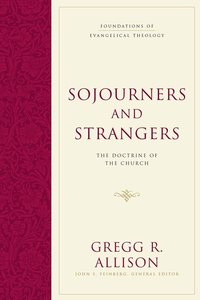
Sojourners and Strangers AllisonSojourners and Strangers by Gregg Allison

Over the past year, I’ve been in the eldership process at my local church. Since it’s been nearly two years since I served in a church staff position and about five years since I was a pastor, I decided to read this book over the summer to brush up on my ecclesiology and to solidify (or challenge) some of my core beliefs. I was not disappointed. Allison masterfully deals with every topic in ecclesiology—from how theology proper trickles down, to the qualifications of elders and deacons, to the sacraments/ordinances, and much more—without avoiding thorny issues or over-simplifying complex matters. And though it is an ecclesiological tour de force, it’s written accessibly and from a pastoral heart.

Tyndale House Greek NTThe Greek New Testament, Produced at Tyndale House

I received a copy of this only a few weeks ago, but I love it more than I thought I would. Obviously, I’ve not read the entire NT in Greek in the past few weeks, but I’ve found this edition to be my go-to for casual reading or reference since the day I cracked it open.

It’s simplified—almost like a Greek “reader’s Bible”—but still contains basic textual notes. It’s not something I’m using in my doctoral work (it’s not built for that level of analysis), but it’s a perfect on-the-go Greek NT for someone like me, who needs as many practice reps in Greek as he can get!


Wesley Hill on Paul, the Trinity, and Theological Method

I interviewed Wesley Hill awhile back about his fantastic book, Paul and the Trinity. Hill’s book is one of the best books I have read in years, and was the catalyst for my current Ph.D. dissertation. I posted it on my old blog, and am reposting the interview here because I think the Biblical Reasoning crowd will find it interesting and helpful. Hopefully, this interview will encourage you to buy it and read for yourself!

Brandon: How does Paul and the Trinity seek to correct misconceptions about Paul’s theology, particularly in regard to the Trinity?

Wesley: One influential misconception about Paul is that he doesn’t have anything distinctive to say about God. As the great Pauline scholar E. P. Sanders once said, “From [Paul] we learn nothing new or remarkable about God… it is clear that Paul did not spend his time reflecting on the nature of the deity.” Paul’s distinctiveness is thought to lie, rather, in his Christology. But my book tries to make an argument that Paul’s Christology is inseparable from his view of God, so that the relationship between God and Jesus is mutually constitutive for the identities of both. You can’t say Paul has a distinctive Christology without also saying Paul has a distinctive understanding of God.

Brandon: While he’s obviously not working with precise Nicene language or concepts, you argue that exegesis of Paul does not reach its full potential without Trinitarian theology. Can you explain that more fully?

Wesley: Trinitarian theology says that God is fundamentally and eternally relational. The Father would not be Father without the Son. The Son would not be Son without the Father. The Spirit would not be the love and gift that he is without the Father and Son who together give and receive him. My book is trying to make the case that that Triune relational “grammar” is a deep insight into Paul’s theology. Paul, too, well before the Council of Nicaea, understood what Kavin Rowe has called the “relational determination” of the divine identity.

Brandon: Do you believe that Paul’s understanding of the Trinity is more fully developed or unique than that of other biblical writers?

Wesley: I don’t think it is more fully developed than, say, the Fourth Gospel’s. Borrowing terminology from my colleague David Yeago, I would say that Paul has a unique conceptual apparatus for talking about God, Jesus, and the Spirit. He uses the reverential substitute “Lord” for the divine name YHWH, and he applies that title to God the Father, Jesus the Son, and the Spirit. But Paul thereby arrives at the same theological judgment as John, the author of Hebrews, and even the Synoptic Gospels, in my interpretation. There is clearly a wide variety of theological vocabularies in play in the New Testament, but in my view there is deep continuity among the various writers at the level of Trinitarian theological judgments.

Brandon: Which thinkers set the foundation for Paul and the Trinity?

Wesley: Kavin Rowe’s book Early Narrative Christology was very important for my work. It made the argument that Trinitarian concepts of “persons” and “relations” were the outgrowth of New Testament texts. The Gospel of Luke, in Rowe’s reading, portrays the “Lord” of the Old Testament and Jesus the “Lord” as “overlapping.” And yet Rowe also emphasized the irreducible distinction of the two in Luke’s narrative: Jesus carries out the mission given him by Israel’s God. This “doubling,” in which both profound identity and distinction are held together, is what later Nicene theology expressed with the language of one ousia (“essence”) and three hypostases (“persons”).

Brandon: There’s been a divide between systematic theology and biblical studies for centuries (insert Gabler joke here), yet Paul and the Trinity is a rich combination of the two. How can this integration move Pauline studies forward?

Wesley: Although it seems counterintuitive to many biblical scholars, reading the creedal, confessional, doctrinal texts of Christian history is, or should be, an exegetical enterprise, precisely because doctrines are exegetically derived. If doctrines came from Scripture, they should lead back to Scripture. In this way, we might say that Christian doctrines like the Trinity are retrospective: they are oriented toward the reading of Scripture; they are meant to take us back to reread the text. They are hermeneutical aids, if you like. Doctrines are not free-floating entities that improve upon the messiness of Scripture by replacing Scripture’s loose ends with a more straightforward, easy-to-follow summary. Rather, they are meant to prompt and enable deeper wrestling with biblical texts, including, as I argue, Paul’s letters.

The Trinity Debate: A Year of Reflections

Last summer, the evangelical Internet was ablaze with debates over the Trinity. The question at hand was, basically, whether or not the Son was subordinate or somehow under the Father’s authority before the Incarnation. No one denies that Jesus submitted to the Father’s will after the Incarnation, as biblical texts are rather clear on this (Matt. 26:39; John 6:38, 14:31; et al.). But the question comes down to how we handle the texts that refer to Jesus before the Incarnation (such as John 1:1ff; Phil. 2:6-11; et al.), and how to mesh all of this with the early Church’s foundational creeds, confessions, and writings.

Instead of rehashing everything here, I have pulled together a brief reading list to refresh your memory or help you catch up for the first time:

  • This article by Liam Goligher started it all (here)
  • Bruce Ware’s response to Goligher (here)
  • Michael Bird’s overview of the concerns (here)
  • Fred Sanders’s outline of foundational Trinitarian affirmations (here)
  • Matt Emerson’s overview of exegesis and history (here)
  • The late Michael Ovey’s rejoinder to the claims (here)
  • Luke Stamps’s survey of the underlying issue in the debate (here) and thoughts on the EFS position (here)

From senior professors to PhD students to undergrads, everyone jumped into the fray, offering their opinions, rebukes, and (thankfully) simply asking questions. The result of this debate was two-fold: (1) professors were forced to tighten up their language about the Trinity, with several scholars doubling back or modifying their positions; and (2) students were forced to make sure they care about the nuances moving forward that some of these professors had overlooked.

We should all be encouraged that this debate happened in public and right in front of us, because it taught us a few good lessons. As a PhD student writing on the Trinity, I have reflected extensively on the debate over the past year. I have learned two lessons in particular that could benefit scholars and students alike:

1. It Is Virtuous to Be Humble and Speak Slowly

The temptation for all of us, especially in the digital age, is to give our opinions. For example, this debate saw undergrads and seminarians calling out theologians like Wayne Grudem and Bruce Ware before either man had time to respond to the articles aimed at him. Conversely, many decided to take on Liam Goligher and Carl Trueman in defense of Grudem and Ware, as though their multi-decade careers of studying and writing on the subject didn’t prepare them to defend themselves.

This is not to say that undergrads and seminarians can’t speak into the conversation. In fact, no one is barred from speaking into it and you’re not inferior to any of the scholars in the debate. But it’s an interesting phenomenon that Ware and Grudem didn’t have 48 hours to respond before half of the Internet was trying to speak on their behalf or against them. They’re big boys, they can handle it. And as seasoned laborers in this debate, it doesn’t hurt to let them have the first word out of sheer respect for their sacrifice and dedication. I was impressed that here at Biblical Reasoning, Matt and Luke posted an open letter by Ware, even though they ultimately disagreed with his conclusions. This was a good example of humility and respect toward a senior scholar in the midst of a tense discussion.

Seminarian — maybe you do have something to say. Maybe you’ve read several books on the Trinity, including some of the primary sources from the 4th century patristic foundations of the debate. Maybe you already know how to parse generation and subordination, how to exegete the difficult texts, and what Gregory of Nyssa thinks about the subject. That’s great! But let me encourage you to practice being slow to speak, even if it’s not a sin to speak. As I mentioned above, there were Trinitarian scholars having to rethink a decade of work when this conversation arose! So there’s nothing wrong with sitting back and trying to learn even more before you attempt to school everyone else online. Patience and humility are always virtuous.

2. It Is Crucial to Do the Quiet Work of Study

Semi-related, this debate shows us that doing the quiet work of deep study — that work that no one sees but you and the Lord — is extremely important. While some seminarians were moderately able to chime into the debate, the truth is, there was a lot of pontification with little substance. There were seminarians online who hadn’t read a single book on the topic, had no idea the difference between the Nicene Creed of 325 and the Nicene-Constantinopolitan Creed of 381, didn’t know basic terminology at hand, and didn’t even understand “what the big deal is.”

Worse, there were scholars in the field taking the microphone and singing way out of tune, as though they’d never exercised their Trinitarian vocal chords before they stepped on stage at the Grand Old Nicene Opry. Some were ignorant of historical sources, others simply defiant toward what it means to converse intelligently and winsomely in academia. If anyone should be modeling the work of deep theological study, it’s our professors, right? Don’t be the person who “fakes it ’til you make it,” getting by on talent and even character without doing the work needed to genuinely contribute to the Church the way your career calls you to.

Seminarian — maybe you’re the smartest student on campus. Maybe you can riff on theology, wowing freshmen and first-year seminarians with your megabrain. Maybe you can write like a world-class poet. That’s great! Use it to encourage and educate when you can. But don’t forget to read, read, and read some more. Dig into primary sources. Read an occasional obscure article. Read biblical commentaries. And please, for the love of Tertullian, read your Bible. Don’t copycat your favorite theologian while not reading the stuff he read to get there.

In all things, we can all remember that doctrine matters because speaking about God rightly matters. We shouldn’t take it lightly. May we all be humble, study hard, and do our work to the glory of God.

Eternal Generation and “Monogenēs”

The doctrine of eternal generation does not stand or fall with how one translates “monogenēs.” Although Lee Irons has helpfully argued that the term probably had the connotation of “only begotten” in the fourth century and in the NT, this only gets us so far regarding classic Trinitarianism. Evangelicals who previously cast doubts upon eternal generation now seem eager to affirm it based on Irons’ lexicographical argument. While I am glad to see this shift, there are still a number of problems with the rationale given for such a change.

  1. Shifting one’s belief in eternal generation based on the translation of one word and/or the exegesis of one passage betrays methodological issues. While we should be ready to affirm any doctrine that is clearly taught in a particular passage or even by a particular word, this is often not how dogmatics works. A good theological method does not merely compile verses isolated from their context or other theological affirmations in Scripture. For a doctrine to be biblical, a whole host of other considerations are required. These include the exegesis of particular passages, the canonical context of each verse identified, and logical and dogmatic considerations of possible theological conclusions.
  2. Arius also affirmed that “monogenēs” means “only begotten.” Simply affirming that “monogenēs” means “only begotten” is the baseline not for affirming classic Trinitiarianism for what gave rise to the Nicene controversy in the first place. The Nicene debates were in many ways about what “only begotten” means, not the definition of a particular Greek word. Further, “monogenēs” itself was not necessarily the center of the exegetical debates; Proverbs 8:22, 25 functions much more prominently in many cases.
  3. Eternal generation is not a doctrine that stood or fell with the translation of “monogenēs,” or the exegesis of passages that contain it. Because of the diversity of passages that Arius, Eunomius, and others cited in support of their position, the pro-Nicene exegetical arguments also ranged widely throughout Scripture. There was certainly focus on a few passages – Proverbs 8, John 5:26, and 1 Cor. 15:26 come to mind – but “monogenēs” itself, and the passages where it is found, comes up infrequently by contrast. This is because, again, the doctrine of eternal generation is not simply an affirmation that “monogenēs” means “only begotten,” but rather an exploration of what Scripture means by “begotten.” “Monogenēs” cannot answer that question by itself. In other words, eternal generation is not a doctrine that is summed up by the translation “only begotten.”
  4. Eternal generation is not a doctrine that stands in isolation from classic Trinitarianism. To paraphrase Boromir, one does not simply affirm bits and pieces of classic Trinitarianism in isolation from consideration of the whole. Eternal generation is tied up with (of course) the broader articulation of the eternal relations of origin, but also with simplicity, aseity, appropriation, inseparable operations, and a whole host of other dogmatic affirmations. While some evangelicals may not have cast doubt upon these corollaries, there are those who have questioned eternal generation while also questioning other pieces of the fabric of classic Christian theism.
  5. Eternal generation does not fit with ERAS. This point is basically the negative side of the previous one. Some evangelicals appear to think they can have their ERAS cake and eat eternal generation, too. But this simply doesn’t work, not only for biblical reasons but also for dogmatic ones.

I am glad that there are evangelicals who want to shift on eternal generation. But for these reasons I think it will take a much more systematic reorientation of their doctrine of God to do so.

Alliterative Trinitarianism

Over the last month or so, I read back through Athanasius and the Cappadocians in preparation for ETS and for an essay on theological method and Trinitarian doctrine. As I’ve worked my way once again (perhaps the fourth time?) through these texts, an organizing scheme for part of their argument came to me . And of course, since I’m a Baptist, this scheme came pre-packaged alliteratively. The following four affirmations, concerning each of the three persons of God, function for the pro-Nicene theologians as some of the main arguments for the full, equal, shared divinity of Father, Son, and Spirit.

  1. Appellations – The pro-Nicene theologians were at pains to show that, while Father, Son, and Spirit each have different personal names, they all are called by the divine name and its synonyms in Scripture. Because Son and Spirit are both called (along with the Father) Savior, Creator, Majesty, etc., they are equally God.
  2. Activities – Similarly, Father, Son, and Spirit are each identified by Scripture as the persons who do what only God does – creates, redeems, judges, and sustains.
  3. Attributes – Father, Son, and Spirit are each called or identified as possessing attributes that are only possessed by God alone, either as superlative communicable attributes (goodness, mercy, justice, holiness, etc.) or divine incommunicable attributes (omniscience, omnipotence, etc.).
  4. Adoration – The three persons of the Godhead each receive worship in Scripture, something that is only applicable to and received by God alone.

Rightly Dividing Trinitarian Grammar

Theologians have often used the term “grammar” to refer to the vocabulary necessary to speak correctly about one doctrine or another. This is especially true with respect to the doctrine of the Trinity; this most important, most studied, most clearly defined doctrine has been passed down to us using particular terms that have particular content (and exclude other content). Included in this Trinitarian grammar are a number of important distinctions, ones that help us talk about the Trinity in a biblically faithful and dogmatically precise way. The list below is not exhaustive, but merely a foray into how the Church has rightly divided Trinitarian grammar for the last two millennia.

  1. Common & Proper. This is perhaps the most fundamental distinction, between what is common to the three persons of the one God in the divine essence and what is proper – unique – to each person. In classical Trinitarianism, the only characteristic proper to each person is their mode of subsistence in the divine essence. The Father is Unbegotten, the Son is eternally Begotten of the Father, and the Spirit is eternally Spirated from the Father and Son.
  2. Creator & Creature. This is the other fundamental distinction in Christian Trinitarian thought; what is properly (uniquely) predicated of a creature cannot be predicated of the Creator or vice versa. (This is a crucial distinction when it comes to the Son’s submission to the Father.)
  3. Immanent & Economic. The former refers to God’s existence apart from creation, including his decree. The latter refers to God’s existence, and particularly how the three persons of God relate, in the entire act of salvation, including the decree.
  4. Immanent & Transitive. These two terms refer to God’s action, the former referring to his internal activity – activity internal to God’s being, i.e. the eternal relations of origin – and activity external to God’s being, i.e. creation and redemption. While God’s action is one, and while both of these actions are therefore eternal, it is important to recognize that immanent activity is necessary and external activity is contingent.
  5. Necessary & Contingent. And that is the last distinction to be made (at least for this post). God’s immanent activity, namely the eternal relations of origin, is necessary for his being. It is just who he is. God’s contingent activity, though, the action of creation and redemption, is external to him, i.e. not necessary to his being. God does not have to take this action, and so whatever kinds of additional predications can be made about the relations that exist between the three persons in this external activity, they are contingent realities in God’s life, not necessary ones.

As you might imagine, the latter two distinctions have important implications regarding ERAS/ESS/etc. First of all, the distinction between necessary and contingent means that we cannot predicate of God’s immanent life what is only true in the contingent activity of creation and redemption. So, while some have pointed out that the Son submits to the Father in the covenant of redemption (if you accept such a doctrine), because that is part of God’s eternal but contingent activity, it is not appropriate to predicate an immanent submission of the Son to the Father.

Second, the distinction between immanent and transitive action is incredibly important. If God’s nature and his immanent existence include relations of authority and submission, that kind of relation necessitates transitive action. In other words, submission requires some external decision and activity in which one party submits to the other. This seems to undercut either the doctrine of aseity – God would be required to act in this case in order to be himself – or the eternal continuity of God’s being – God would change in his nature at some point (in his activity) and introduce a new kind of relationship in his immanent life.

These are the kinds of dogmatic questions I and Luke, among others, have continued to allude to in our posts about the Trinity and in subsequent public conversations. It is not enough to simply say that human father and son language in Scripture almost always includes an element of submission; one must also ask whether predicating what is true of human relationships of relations in God’s inner life is appropriate given these dogmatic considerations. I’d say the answer is, clearly, no.