Matthew Bates on Ancient Exegesis, Faith Alone, and 7 Kids

This episode is a conversation with Dr. Matthew Bates of Quincy University. We discuss crazy birth stories (2:20), becoming a scholar (5:00), the apostles’ and early church fathers’ hermeneutics (10:50), expanding on the definition of “faith alone” (18:45), favorite fiction novels (32:00), and more. Buy Matt’s books.

Church Grammar is presented by B&H Academic and the Christian Standard Bible. Intro music: Purple Dinosaur by nobigdyl.

*** This podcast is designed to discuss all sorts of topics from various points of view. Therefore, guests’ views do not always reflect the views of the host, his church, or his institution.

Joel Green on Good Biblical Scholarship

This week, Logos Academic posted this piece by Fuller Seminary’s Joel Green on their blog as a part of the “What Makes a Good Biblical Scholar?” series. It provoked a heated reaction from some corners of the Internet and among certain sections of the biblical studies guild. Here are some of my thoughts on it:

  1. I think it is clear to those who know Dr. Green’s scholarship that he is using “good” in a particular sense, namely in relation to the scholar who holds particularly Christian commitments, beliefs, and orientations toward her or his work. He makes this clear in the comments. Yes, it would have been helpful to have fronted this comment, but a good faith reading of an intentionally brief piece in a series of such pieces understands this, I think.
  2. In other words, Green is defining “good biblical scholar” with only one possible definition of “good.” He doesn’t claim that his description is the only possible definition of “good,” and he clarifies that in the comments. There are other possible ways of defining “good biblical scholar,” which, I take it, is part of the purpose of the blog series.
  3. If you’re familiar with Green’s scholarship, you’ll know that he *does* believe there are other definitions of “good biblical scholar” from the fact that he engages non-Christian biblical scholars liberally, critically, and appreciatively.
  4. The real issue I have with some reactions is not that they ask Green to clarify that he does, in fact, believe that there are other definitions of “good biblical scholar.” The issue I have is that some commenters refuse to acknowledge Green’s own definition as a possible definition. For many biblical scholars, introducing any kind of faith or devotional element into the practice of biblical studies automatically voids it of the quality, “scholarly.”
  5. As I and others have said repeatedly, I do not think many in the biblical studies guild has reckoned adequately with the epistemological foundations on which it often rests. The invocation of empiricism and rationalism as somehow automatically superior and qualitatively different from, say, faith seeking understanding betrays a lack of critical engagement with one’s own beliefs that these kinds of comments purport to champion.
  6. In other words, I am not (and Green is not) “anti-biblical studies,” or unappreciative of the many excellent, high-level, scholarly contributions of non-Christians to the field, or claiming a kind of intellectual superiority to those same non-Christian biblical scholars. But the reverse is often not true.

Darian Lockett on Types of Biblical Theology and College Basketball

This episode is a conversation with Dr. Darian Lockett of the Talbot School of Theology. We discuss his denominational pilgrimage (1:45), baptizing kids (14:00), the theology of the catholic epistles (22:30), types of biblical theology (33:40), cheating(?) in college basketball (54:15), and more. Buy Darian’s books.

Church Grammar is presented by B&H Academic and the Christian Standard Bible. Intro music: Purple Dinosaur by nobigdyl.

*** This podcast is designed to discuss all sorts of topics from various points of view. Therefore, guests’ views do not always reflect the views of the host, his church, or his institution.

Daniel Treier on Theological Interpretation and Longsuffering Sports Fandom

This episode is a conversation with Dr. Daniel Treier of Wheaton College. We discuss longsuffering sports fandom (2:10), the good and bad of theological interpretation of Scripture (3:30), recovering from a house fire (25:00), handling busyness and productivity (33:20), and more. Buy Dan’s books.

Church Grammar is presented by B&H Academic and the Christian Standard Bible. Intro music: Purple Dinosaur by nobigdyl.

*** This podcast is designed to discuss all sorts of topics from various points of view. Therefore, guests’ views do not always reflect the views of the host, his church, or his institution.

Thomas Schreiner on Pauline Debates, Parenting, and Being a Hipster

Our debut episode is a conversation with Dr. Tom Schreiner of The Southern Baptist Theological Seminary. We discuss parenting (3:50), becoming a scholar (6:30), the development of Pauline scholarship over the past 30 years (8:30), favorite books on Revelation (29:40), what complementarians get right and wrong (35:40), and more. Buy Tom’s books.

Church Grammar is presented by B&H Academic and the Christian Standard Bible. Intro music: Purple Dinosaur by nobigdyl.

*** This podcast is designed to discuss all sorts of topics from various points of view. Therefore, guests’ views do not always reflect the views of the host, his church, or his institution.

Introducing: Church Grammar

In this short introduction we discuss the purpose and hopes for the Church Grammar podcast, and look forward to some forthcoming guests and topics.

Church Grammar is presented by B&H Academic and the Christian Standard Bible. Intro music: Purple Dinosaur by nobigdyl.


Responding to Critiques of Inerrancy

410sPVQPOsL._SX331_BO1,204,203,200_In Can We Still Believe the Bible?, Craig Blomberg offers some observations on critiques of inerrancy and the idea that inerrancy “dies the death of a thousand qualifications” (pp. 126-130).

He first employs Paul Feinberg’s definition: “Inerrancy means that when all facts are known, the Scriptures in their original autographs and properly interpreted will be shown to be wholly true in everything that they affirm, whether that has to do with doctrine or morality or with the social, physical, or life sciences.”

Blomberg says that inerrancy, then, actually has far less qualifications than most major doctrines like the Trinity or various schools within soteriology and eschatology. Feinberg’s definition has only four qualifications, all of which are left to hermeneutical and exegetical debate within these caveats. I think this should be true, but all too often inerrantists want other inerrantists to affirm whatever narrow definition they have created for themselves, leaving such little wiggle room that one wonders if inerrancy can mean anything at all. That said, Blomberg is right to fight for a healthy definition of the term rather than pretend that it is not an issue — especially here in the States.

He also argues that some people falsely consider “infallibility” or “verbal plenary inspiration” to be clearer terms. However, “the meaning of ‘inerrancy’ is morphologically straightforward: without error,” he explains. “What complicates matters is not the meaning of inerrancy, but the debate over what constitutes an error.” This gets to the heart of some of the standard external and intramural debates about inerrancy, though there is a whole hermeneutical battle being fought even within many inerrancy-affirming faculties.

Here are snippets of Blomberg’s responses to three main critiques about errors in the Bible, which I find helpful to remember in these conversations:

1.We live in a scientific world that values high degrees of precision in countless walks of life. … [H]ence by default we frequently impose modern standards of accuracy on ancient texts in hopelessly anachronistic fashion. Imagine being told one day that your job performance was going to be assessed based on standards not invented until the forty-second century, or shortly before. You’d be outraged. But often without realizing it, we impose on ancient documents twenty-first-century standards that are equally inappropriate. …

To this day, we use round numbers; ancient cultures did so regularly. … A grammatical or spelling “error” in any culture refers simply to nonstandard writing or usage of words; it is not as if there is some divinely mandated correct way to turn oral speech into letters or to arrange words to make a coherent thought. … The reporting of people’s words is a particularly significant example of where the ancients employed noticeably less precision than we moderns do. … In fact, when one historian borrowed from existing sources, it was considered good literary style and an appropriate way of owning information for oneself not to reproduce all the words verbatim…”

2. Another mistake many people make is to confuse inerrancy with literal interpretation. Even the expression ‘literal interpretation,’ as it was employed by the Reformers, meant taking the words of Scripture according to their most straightforward, intended meaning, not ignoring figurative language. … Entire passages and even whole books of the Bible may employ literary forms or genres that are misunderstood if taken completely historically. Apocalyptic literature affords a classic example. …

To affirm the inerrancy of Revelation 13:1-10 does not commit us to believing that a dragon or a beast actually exists as depicted in these verses. Instead, it means that the realities to which they point—Satan and a coming antichrist—really exist, and John really did have a God-given vision in which these individuals were represented by the creatures described. Indeed, defenders of inerrancy do not reflect often enough on what it means to say that nonhistorical genres are wholly truthful.”

3. Inerrancy does not preclude the hermeneutical need to distinguish between situation-specific and timeless commands or models in Scripture. Applying Old Testament texts in the New Testament age requires believers to filter each passage through the grid of its fulfillment in Christ (Matt. 5:17-20). Believers should not bring bulls or goats with them to church to be slaughtered to atone for sin … Christ has paid it all, as our once-for-all sacrifice for sin (e.g., Heb. 9:24-28); we obey the Levitical commands by trusting wholly in Jesus’s full and final atonement. …

When ancient Christians greeted one another with a holy kiss, they were following a culturally common and non-erotic practice of greeting friends. If kisses in certain modern cultures are not a common greeting and are likely to arouse romantic feelings, then some cultural equivalent such as a warm handshake or appropriate kind of hug should be substituted. These are all issues of proper hermeneutics and contextualization, not the direct application of a belief in inerrancy.”

John the Seer vs. Caesar

Screen-Shot-2017-02-25-at-8.51.28-PM-300x299While compiling notes for my dissertation on the Book of Revelation, I came across this note on Revelation 1:16 in Craig Koester’s Revelation commentary:

The section climaxes by noting that [Jesus] holds seven stars in his right hand (Rev 1:16). This cosmic imagery conveys sovereignty. An analogy appears on a coin from Domitian’s reign that depicts the emperor’s deceased son as young Jupiter, sitting on the globe in a posture of world dominion. The coin’s inscription calls him “divine Caesar, son of the emperor Domitian,” and the imagery shows him extending his hands to seven stars in a display of divinity and power. John has already identified Jesus as the ruler of kings on earth (1:5), and the imagery of the seven stars fits the book’s larger context, which contrasts the reign of Christ with that of imperial Rome. (p. 253)

Koester is referring to the coin in the image (above), used in Rome around AD 88-96 during the reign of the brutal Caesar Domitian. Koester’s insights here give us an interesting look at the background of John the Seer’s writing during hostile Roman persecution. It also helps us think about the later date of Revelation’s writing (the end of the first century) versus a potential earlier dating (some say it might’ve been written closer to AD 65). This is enough to chew on a little bit.

But it offers us more than that. This information helps shed light on the theology of Revelation.

First, it serves as an example that much of Revelation’s imagery (beasts, numbers, etc.) is a direct shot at the Roman empire. Many believe (and I’m largely convinced) that Revelation is written during intense Roman persecution and this letter was first written to encourage the church during that time. However, as a non-preterist, I believe portions of the letter are speaking of future events—i,e., Jesus hasn’t come back yet; the New Jerusalem isn’t here yet; etc. In any event, this note might help us better understand the anti-imperial leanings of John.

Second, it shows us how high John’s Christology was. He’s not merely putting Jesus on par with some exalted or glorified person. Rather, he’s portraying Jesus as divine—specifically pitting Jesus’s true divine sovereignty against the supposed divine sovereignty of the Roman emperorship. Roman caesars liked to pretend to be gods, but John is reminding them and us that there’s only one true God. Jupiter is seated on the world with stars hovering around him? Ha! Jesus created the world and clutches the stars in his hand.

As I argue in my dissertation and elsewhere, John explicitly and purposely ties Jesus into the divine identity of YHWH, and this little note only adds to the case.

My 5 Favorite Books of 2017​

It’s become a somewhat annual tradition for me and many others to write a post like this. But people love books lists as they consider last-second Christmas gifts or are looking for ways to spend their Amazon gift cards.

There are a few reasons why I’ve compiled this list. First, I love reading and I love to share what I’m reading. Second, I’m also always encouraged by others’ thoughts and their lists often help me pick out a few last books for my Christmas wish list. Third, I get a lot of books from publishers, and while I don’t review or share books I don’t end up liking, I’m always willing to recommend a good book if it is, in fact, good.

In no particular order, here are my five favorite books that I read in 2017. Check out my 2015 list and 2016 list at my old Patheos blog.

Hengel Son of GodThe Son of God by Martin Hengel

Published in 1975, this book was one of many in which Hengel dismantled and reconstructed Christological debates in the mid-20th century, arguing that Christians believed in the divinity of Christ very early on. In this book, Hengel explains the role the title “Son of God” played in that early development of divine Christology. Only coming in at around 100 pages, Hengel still does some significant Christological heavy lifting.

Way of the Dragon StrobelThe Way of the Dragon or the Way of the Lamb by Jamin Goggin and Kyle Strobel

Of all the books I read this year, this one was the most impactful on me personally. It proved to be the final straw that broke my social media camel’s back. I deleted all my social media accounts soon after finishing it.

Through biblical exegesis, personal reflections, and interviews with men like J. I. Packer and Eugene Peterson, Goggin and Strobel lay out the case for a view of ministry and leadership (and indeed, life) that resembles the way of the Lamb—generosity, self-sacrifice, wisdom in speaking truth, love, etc. Too often, we fall into the way of the dragon (Satan himself)—selfishness, pride, vitriol, hate, etc. And where I saw myself falling into the way of the dragon the most was on social media and the struggle of “platform.”

On God and Christ NazianzusOn God and Christ by St. Gregory of Nazianzus

I’ve read this book several times, and reading it again in 2017 reminded me of its beauty. Simply put, it is one of the most important books (originally a set of sermons) in the history of the Christian church due to its formative impact on Trinitarian theology and Christology. If the Trinity debate made you scratch your head or piqued your interest in the subject, this is a must-read. We’d all do well, actually, to read the Fathers on the Trinity before we get too far down the Trinitarian road.
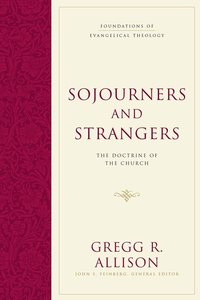
Sojourners and Strangers AllisonSojourners and Strangers by Gregg Allison

Over the past year, I’ve been in the eldership process at my local church. Since it’s been nearly two years since I served in a church staff position and about five years since I was a pastor, I decided to read this book over the summer to brush up on my ecclesiology and to solidify (or challenge) some of my core beliefs. I was not disappointed. Allison masterfully deals with every topic in ecclesiology—from how theology proper trickles down, to the qualifications of elders and deacons, to the sacraments/ordinances, and much more—without avoiding thorny issues or over-simplifying complex matters. And though it is an ecclesiological tour de force, it’s written accessibly and from a pastoral heart.

Tyndale House Greek NTThe Greek New Testament, Produced at Tyndale House

I received a copy of this only a few weeks ago, but I love it more than I thought I would. Obviously, I’ve not read the entire NT in Greek in the past few weeks, but I’ve found this edition to be my go-to for casual reading or reference since the day I cracked it open.

It’s simplified—almost like a Greek “reader’s Bible”—but still contains basic textual notes. It’s not something I’m using in my doctoral work (it’s not built for that level of analysis), but it’s a perfect on-the-go Greek NT for someone like me, who needs as many practice reps in Greek as he can get!


Basics for Interpreting the Book of Revelation

I didn’t grow up a Christian, but as soon as I began following Christ and attending a local church, I was almost immediately introduced to the Book of Revelation via the movie Left Behind. Like most Southern Baptist churches in the 90s, we talked a lot about the rapture, the Antichrist, the Tribulation, and miscellaneous details we could supposedly understand by decoding Revelation’s bizarre language and imagery.

Relatedly, I always remember being told I’d spend forever in Heaven, once I was raptured with Jesus and this world was destroyed. When I thought about Revelation, it was mostly wars, meteors, and desolation. Many of you can probably relate. I’m grateful, though, that I’ve been able to study Revelation for many years now, including as a major piece of my dissertation. In my experience, Revelation has been underplayed, under-appreciated, and simply misrepresented.

While there are many ways to approach interpreting Revelation, here are a few basics to consider first.

1. Revelation is not a book about destruction and fear.

Revelation certainly has its destructive elements—bowls of wrath poured out, beasts, the fall of Babylon, etc. However, these elements point to a greater hope, a hope found in God’s justice in his war against sin and death and evil. These sometimes terrifying elements of the book serve to show us that God is making all things new and redeeming the world fractured by the Fall (Rev. 21-22), not that he’s coming for us with a fireball in one hand and a lighting bolt in the other. Revelation has destruction within it, but it isn’t about that. It’s about our hope in the culmination of God’s promises.

2. Revelation is not about escaping Earth.

“This is not my home, I’m just passing through” is a sweet hymn, but it’s wrong. We don’t spend eternity in some far away place in the sky. Rather, we spend eternity right here, on this planet, the way God intended from the beginning (Gen. 1-2). This place is our home, though it’s certainly due for a major renovation. Sin didn’t cause a Plan B in God’s sovereign blueprint. He’s not abandoning his original plan for an Earth sprawling with image-bearers just because we messed things up; no, he will resurrect his people just like he resurrected his Son (1 Cor. 15). Heaven and Earth were joined together in the beginning, and they’ll come back together in the end (Rev. 21-22).

3. Revelation is not merely about future, end-times events.

This is probably the most misunderstood portion of Revelation. To be sure, it is an apocalypse in the sense that it deals with visions, prophecy, judgment and redemption, etc. However, we should remember that the book is also addressed to a specific audience in specific time (Rev. 1-3), and deals with issues that the original audience could understand and apply. It’s safe to say that Rev. 21-22 are about future events that haven’t happened yet, but the rest of the book is debatable. Likely, most of Revelation simultaneously applies both to its original audience and every generation afterward. Many of the allusions to Babylon, an antichrist, etc. can be applied to Rome and the Caesar the original audience knew, while also being representations or types for many generations of worldly kingdoms and rulers.

4. Revelation is not divorced from the rest of the Bible.

The numbers vary depending on who you ask, but most scholars say that Revelation has approximately 600 references or allusions to the Old Testament. In my study of Revelation, I’ve seen these allusions over and over again. Revelation’s author, John, never directly quotes the OT, but there are unmistakable allusions or hat-tips to the OT every few verses. John likely sees himself as a type of prophet, self-consciously telling the story of how Jesus finally fulfills all of the promises and expectations of the prophets, from Daniel to Isaiah to Zechariah to many others. Revelation is very much a capstone to the Bible’s unified storyline, not a freaky add-on to the end.