Book Notice: Hearing the Old Testament: Listening for God’s Address

A book to keep your eye on if you are interested in theological interpretation is Hearing the Old Testament: Listening for God’s Address (Eerdmans) edited by Craig G. Bartholomew and David J.H. Beldman. In the Preface Bartholomew and Beldman lament that the Old Testament is for the most part unknown by the majority Christians and that there are far too few books to assist Christians to feast upon it as Christian Scripture. Their response to the famine is this edited volume with the goal of listening for God’s address through the Old Testament:

At the heart of the hermeneutic advocated in this book is the belief that our love for the Old Testament and our desire for God will come together only when we make the goal of our interpretation to listen for God’s address. If Scripture is God’s Word, then any other goal is inadequate.

Hearing the Old Testament boasts an impressive collection of contributors beginning with Bartholomew’s opening chapter, “Listening for God’s Address: A Mere Trinitarian Hermeneutic for the Old Testament.” Part II of the volume concerns methods in interpretation and is appropriately named, “Learning to Listen.” Essays from Part III are involve listening to the different sections of the Old Testament.  Part IV concludes the volume with, “Hearing and Preaching the Old Testament.”

What stands out about this volume is the careful editorial process. Contributors to Part II, “Learning to Listen” first read Bartholomew’s chapter on Hermeneutics and then were invited to interact either positively or negatively with his essay. Contributors to Part III were asked to write their chapters after reading Bartholomew’s chapter and the chapter’s on “Learning to Listen.” Part IV was then written in light of the Parts I-III. This type of editorial planning should bring a certain type of cohesion that normally lacks in an edited volume. I only hope that future volumes may follow suit.

The List of chapters and authors:

  1. Listening for God’s Address: A Mere Trinitarian Hermeneutic for the Old Testament by Craig G. Bartholomew
  2. History of Old Testament Interpretation by Al Wolters
  3. Philosophy and Old Testament Interpretation by Bartholomew
  4. Literary Approaches and Old Testament Interpretation by David J.H. Beldman
  5. History and Old Testament Interpretation by Tremper Longman III
  6. Biblical Theology and Old Testament Interpretation by Mark J. Boda
  7. Canon and Old Testament Interpretation by Stephen G. Dempster
  8. Mission and Old Testament Interpretation by Christopher J.H. Wright
  9. Ethics and Old Testament Interpretation by M. Daniel Carroll R.
  10. Hearing the Pentateuch by Gordon J. Wenham
  11. Hearing the Historical Books by Iain Provan
  12. Hearing the Psalter by J. Clinton McCann Jr.
  13. Hearing the Old Testament Wisdom Literature by Bartholomew
  14. Hearing the Major Prophets by Richard Schultz
  15. Hearing the Minor Prophets by Heath Thomas
  16. Hearing and Preaching the Old Testament by Aubrey Spears
Dan Wallace on the Discovery of 7 Early Manuscripts

Jim West recently posted a video of Dan Wallace being interviewed on the discovery of 7 early NT manuscripts. This is, to say the least, a very important find for NT studies. Watch the video here:

Dan Wallace on 7 Early MSS

via Dan Wallace on the Discovery of 7 Early Manuscripts.

Ehrman, Canonization, and the OT Prophets

After teaching through the Latter Prophets and Writings this past quarter, I was continually struck by two things – the fact that the prophets were generally ridiculed, persecuted, and ignored, and the fact that the entire Old Testament canon is a coherent whole, continually tied together textually. Each author appears to relate his work to previous material in the OT and especially to the Torah.

Couple that with the fact that Bart Ehrman has been on my mind recently (I blame Dan Wallace and the Mark fragment), and you know why I’ve been thinking about canonization. Specifically, I’ve been thinking about the entire worldview Ehrman has attempted to construct (or, rather, glom off of Walter Bauer) concerning the formation of the biblical canon. Ehrman would have us believe that the canon is the product of the “orthodox” winning against Gnostics and others whose writings were of a completely different character from what we find in the New Testament. Of course, Ehrman’s focus is on the NT but I would imagine he might say something similar of the OT canon’s formation.

Back to the Latter Prophets – I just don’t see how Ehrman’s view of canonization fits, especially with the prophets. The prophets were not popular, and even after the exile their message probably would not have been especially well received. This doesn’t fit with Ehrman’s view that the “popular crowd” wins out in canon battles.

More importantly, though, I simply don’t see how Ehrman’s view fits given the organic growth of the canon. Scholars like Brevard Childs, Stephen Chapman, and Christopher Seitz have demonstrated again and again that the Old Testament was formed through continually re-appropriating the received text in light of new situational circumstances. The people of God continued to receive a fresh word, but it was always a fresh word tied to the word that had already been received.

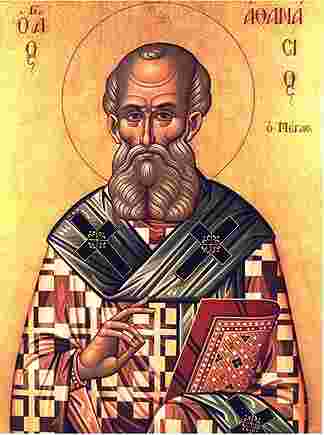
Furthermore, I don’t see why we shouldn’t view the New Testament’s formation this way as well. It wasn’t as if the NT authors’ message was wildly popular among the larger Roman population, and though it was much more accepted by the time of Athanasius’ festal letter, evidence suggests that the canon was quite stable well before that point (see David Trobisch, The First Edition of the NT).

Additionally, I understand that Seitz argues that the New Testament canon was formed in much the same way as the Old in his new book (although I haven’t been able to get to it yet). And by studying the way the New Testament uses the Old I think this makes abundantly more sense than saying that a council 400 years (or 600 if you want to take Ehrman’s most ridiculous proposal) after the fact chose the 27 books of the NT. The NT clearly uses OT texts, narratives, and themes to interpret Christ’s life, death, resurrection, ascension, commissioning of the Church, and eventual return. The books of the NT were written for the same reason and using the same approach as the OT. God had done something new, this time decisively and finally, in Jesus Christ, and the Holy Spirit inspired the authors to interpret that event in light of the received word of the Old Testament.

So the fact that both the OT and NT are the products of organic growth flies in the face of Ehrman’s assertion that the canon is a disparate group of writings that fit with what the “orthodox” felt needed to be included.