Thomas Joseph White on Tough Christology Questions and Aquinas among Protestants

This episode is a conversation with Fr. Thomas Joseph White, O.P. of the Angelicum. We discuss his journey from Atlanta, GA to Rome (1:35), the life of a Dominican friar (5:45), basic guardrails for the doctrine of incarnation (9:50), avoiding problems of the Son “subtracting” or “adding” in the incarnation (14:17), could Christ have sinned? (19:50), the relationship between Christ’s divine and human knowledge (25:28), Christ’s beatific vision and “self-awareness” (31:47), the Holy Spirit’s role in Christ’s human life (41:46), Aquinas among the Protestants (45:54), favorite Protestant theologians (52:04), and more.

Buy Thomas’s books. Also, check out his band, The Hillbilly Thomists.

Church Grammar is presented by the Christian Standard Bible. Intro music: Purple Dinosaur by nobigdyl. Producer: Katie Larson.

Brandon D. Smith is Assistant Professor of Theology & New Testament at Cedarville University, Editorial Director for the Center for Baptist Renewal, and writes things. You can follow him on Twitter at @brandon_d_smith.

*** This podcast is designed to discuss all sorts of topics from various points of view. Therefore, guests’ views do not always reflect the views of the host, his church, or his institution.

The Best of 2021

Last year, I started a tradition of compiling a few of my favorite things from the year ending. Books, music, and film have been my constant companions for as long as I can remember. So here are my superlatives from 2021.

Favorite Book

The Incarnate Lord: A Thomistic Study in Christology, by Thomas Joseph White

I am a slow and deliberate and fairly selective reader. I rarely read books that are hot off the presses. There are so many great books that I haven’t read that I usually wait to see which books stand up to the scrutiny of time before making the commitment to read them. I try to prioritize the classics I haven’t read, or haven’t read in too long (for example, this year I did some remedial work in Pseudo-Dionysius, Bernard of Clarivaux, and Bonaventure). So I almost never read enough books published in the current year to have a favorite. This year was no different. My favorite book from 2021 was actually published in 2017. Thomas Joseph White, a Dominican Thomistic scholar of the first rank, has written a truly magisterial treatment of this central Christian doctrine (I noticed it made Brandon’s best of list too). White’s book covers a remarkably wide range of issues on the person and work of Christ: everything from dyothelitism and the satisfaction theory of the atonement to the descent into hell and the nature of the resurrection body. I don’t quite agree on every point (his critique of the Calvinist doctrine of penal substitution distorts some things) but White’s treatment is consistently erudite and fair. Almost he persuadest me to believe Thomas’s view on the knowledge of the human nature of Christ (that Christ possessed the beatific vision and perfect knowledge in his higher soul). Overall, this book is a remarkable achievement in defense of classic Christology and an ontological understanding of Christ as true God and true man.

Honorable Mention: Dracula, by Bram Stoker, a classic in the horror genre I only recently read for the first time.

Favorite Movie

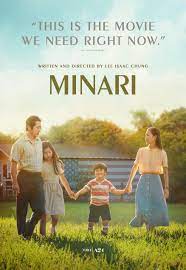
Minari, written and directed by Lee Isaac Chung

I believe this was officially a 2020 film but only had wide release in early 2021. It tells the story of a Korean immigrant family trying to build a farm and adjust to life in 1980s rural Arkansas. Beautifully shot and brilliantly acted, Minari is small story with massive implications for the human predicament. Some of the turns are wrenching, but the resolution is positively feel-good . Don’t miss the religious overtones: the religious fanatic, the exorcisms, the idol of money, the importance of church/community, the inclusion of the other, the costs of love, the gifts of grace (the minari plant that gives the film its title grows without effort). Also, the main character is named Jacob and he builds a well! Another subtext: the emotional strains of manhood in bleak economic circumstances, a theme that is noticeably muted in much popular art. (As I write this, there are a couple movies I have yet to see that are much anticipated: P. T. Anderson’s Licorice Pizza and Guillermo del Toro’s Nightmare Alley).

Honorable mention: Dune: Part One, directed by Denis Villeneuve

Favorite Album

Pressure Machine, by The Killers

I have always enjoyed The Killers (and lead singer Brandon Flowers’ solo work as well) but this album marks a decisive step forward for the band, in my estimation. The polished pop rock anthems are traded in for mostly subtle and somber acoustic reflections on the depths of human pain. I don’t want to share too much because the album needs to be experienced not over-analyzed, but suffice it to say the album is about life in rural Utah (where Flowers lived for a period as a child) and especially the aftermath of the opioid epidemic (overdoses, suicide, and the shattered dreams of youth). Musically, it has echoes of R.E.M. and fairly obvious homages to Bruce Springsteen. The latter comparison is most apt because Flowers is able to accomplish for his native West what the Boss did for the working class in his native New Jersey. Religious themes are threaded throughout. So this isn’t just an album about pain; it’s also about wrestling through doubt and despair to find meaning and hope, symbolized in the opening track’s “West Hills” (a theme pregnant with biblical allusions).

Honorable Mention: I Don’t Live Here Anymore, by The War on Drugs

My 5 Favorite Books of 2021

It’s become an annual tradition for me and many others to write a post like this. Check out my past lists: 2015 and 2016 lists at my old Patheos blog, and my 2017, 2018, 2019, and 2020 lists posted here at Biblical Reasoning.

In no particular order, here are my five (six! I cheated this year) favorite books that I read in 2021.

Which Trinity? Whose Monotheism? by Thomas H. McCall

This is a classic example of a book I should’ve read years ago—it came out in 2010!—but just never had the chance to, aside from dabbling in a few chapters here and there. In my view, McCall represents the best of the “analytic theology” (AT) movement: the notably logically-rigorous flavor of AT, but rooted deeply in Scripture and the Christian tradition. His critique of eternal subordination of the Son, years before the 2016 debate, is particularly helpful and still relevant.

The Incarnate Lord by Thomas Joseph White

Another book I came a little late to, but am glad I did. Few people have White’s rare ability to engage some of the most theologically and philosophically complex issues with clarity and precision. In this book in particular, he tackles all of the major issues and questions that arise in Christology in general and Aquinas’s Christology in particular.

Faith, Hope, Love by Josef Pieper

After becoming somewhat bored of overwrought, pragmatic books on morality and ethics, I asked a few philosophy/ethics scholar-friends for recommendations. This book by Pieper was the near-unanimous recommendation. I was blown away by his simple, even doxological, approach to theological ethics, which has obviously been fostered over Pieper’s decades of personal reflection and practice.

On the Trinity by Hilary of Poitiers

I’m always reading the church fathers as part of my research, teaching, and personal interest, and it was my goal this year to read the entirety of Hilary’s work on the Trinity. “The Athanasius of the West” did not disappoint; his orthodox Trinitarian formulations are worked out in unique ways, and his framing around Exod. 3:14 is worth the price of admission.

Letters for the Church by Darian R. Lockett

Lockett is one of my favorite New Testament scholars (and all-around human beings). His broader scholarship contributes to two broadly under-appreciated fields: canon and the Catholic/General Epistles. Those two expertises combine into an excellent, accessible volume on the major theological and canonical issues in interpreting these epistles.

The Same God Who Works All Things by Adonis Vidu

Vidu’s work is truly a monumental addition to the field of Trinitarian theology. Simply put, inseparable operations are a crucial piece of the Trinitarian puzzle, and Vidu’s is the first full-scale work done on the doctrine in recent memory. This book has a great combination of exegetical insights, theological imagination, and historical sensitivity.